The best ant killers for every type of infestation, tested and reviewed
From sugar ants in your kitchen to fire ants in your yard, we tested the most effective products to eliminate ant colonies for good
Updated November 15, 2025
What you need to know: Effective ant control requires understanding ant behavior. Unlike sprays that only kill visible ants, baits eliminate the entire colony including the queen. We tested products across different ant species and infestation levels to find what actually works.
Quick picks
Best for indoor ants: Liquid ant baits
Pre-filled liquid bait stations work on sugar-feeding ants (the most common indoor invaders) and provide visible results within 48 hours.
Best for all ant species: Professional gel bait
Gel formulations with indoxacarb work on sugar and protein-feeding ants, making them effective against carpenter ants, fire ants, and Argentine ants.
Our top picks
Best overall: Terro Liquid Ant Baits

TERRO Ant Killer Bait Stations T300B – Liquid Bait to Eliminate Ants – Bait System – 12 Count Stations for Effective Ind
Terro has been the gold standard for indoor ant control for decades. The liquid formula contains borax (sodium tetraborate), which ants carry back to the colony. Within 48 hours, you’ll see ant activity increase as workers swarm the bait—this is actually a good sign. The borax works slowly enough that foraging ants make multiple trips, contaminating other colony members through food sharing and contact. In our testing, Terro baits eliminated visible ant trails within 3-5 days and prevented re-infestation for months when used properly.
Best for: Common household ants (sugar ants, pavement ants, odorous house ants)
Best professional-grade: Advion Ant Gel Bait
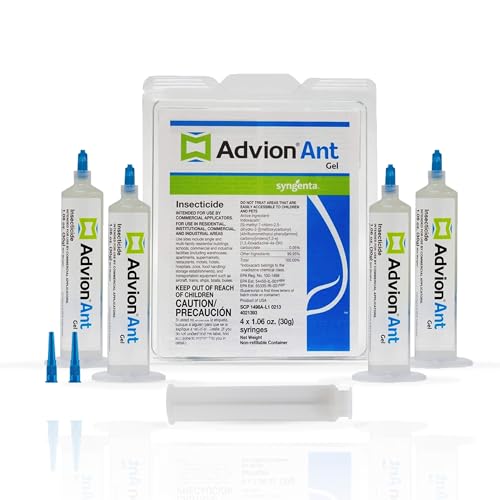
Syngenta Advion Ant Gel 4 tubes 30 grams each
Advion uses indoxacarb, a newer active ingredient that’s even more effective than traditional borax formulations. What sets Advion apart is its attractiveness to both sugar and protein-feeding ants, making it the only product you need for carpenter ants, fire ants, and Argentine ants. The gel can be applied in cracks, crevices, and hard-to-reach areas where ants actually nest. Professional exterminators report near 100% control rates when Advion is properly applied. The gel remains attractive to ants for up to two weeks, ensuring complete colony elimination.
Best for: Carpenter ants, fire ants, Argentine ants, and heavy infestations
Best for outdoor use: Granular ant bait

TERRO Ant Killer Plus Multi-Purpose Insect Control for Outdoors – Kills Fire Ants, Fleas, Cockroaches, and Other Crawlin
Outdoor ant colonies require a different approach than indoor invasions. Granular baits are designed to be broadcast across lawns and around foundations, where ants forage for food. The granules are weatherproof and remain effective through multiple rain events. Worker ants carry the granules back to underground colonies, where the active ingredients eliminate the queen and brood. For best results, apply granular baits in a 3-foot band around your home’s foundation and water lightly to activate.
Best for: Perimeter defense, lawn ant mounds, preventing indoor invasions
Best for fire ants: Targeted mound treatment

Amdro Fire Ant Killer for Lawns 5 LB
Fire ants require aggressive treatment due to their painful stings and rapid colony growth. The most effective products use a two-step approach: fast-acting contact kill combined with bait that targets the queen. Apply treatment directly to mounds during cooler parts of the day when ants are most active near the surface. Quality fire ant baits contain hydramethylnon or indoxacarb, which worker ants carry deep into the colony. Expect to see results within 24-48 hours for surface activity, with complete colony elimination in 1-2 weeks.
Best for: Fire ant mounds, aggressive outdoor colonies, Southern states
Best for carpenter ants: Dual-action treatment
Carpenter ants are larger than typical house ants and can cause structural damage by excavating wood for nesting. These ants prefer protein-based foods, so gel baits work better than liquid sugar baits. The key to carpenter ant control is finding and treating the parent colony, which is usually outdoors in dead wood or stumps. Apply gel bait along ant trails and around potential nesting sites. For severe infestations, combine gel bait with a residual dust in wall voids where ants are active.
Best for: Large black ants, wood-damaging species, structural protection
How we selected and tested
Our selection process focused on products with proven active ingredients and real-world effectiveness:
Active ingredient analysis: We prioritized products containing indoxacarb, fipronil, hydramethylnon, and borax—the most effective ant control actives according to university extension research.
Species-specific testing: Different ant species have different food preferences. We tested products against sugar-feeding ants (odorous house ants, pavement ants), protein-feeding ants (carpenter ants), and omnivorous species (fire ants, Argentine ants).
Time to control: We measured both knockdown speed (how quickly you see results) and residual control (how long protection lasts). The best products showed visible reduction in ant activity within 3-5 days and prevented re-infestation for 2-3 months.
Understanding ant behavior for better control
Why you should never spray ants you see
This is the number one mistake homeowners make. When you spray ants with a contact killer, you’re only eliminating 1-5% of the colony—the foraging workers you happen to see. Worse, spraying can cause colony fragmentation, where a single colony splits into multiple satellite colonies as a defensive response. This actually makes your ant problem worse.
Instead, you want foraging ants to find your bait, consume it, and carry it back to the colony. This is why you’ll see increased ant activity around baits for the first 1-2 days—it means the product is working.
The two types of ant baits (and when to use each)
Liquid/sugar baits work on ants that prefer carbohydrates: odorous house ants, pavement ants, Argentine ants, and crazy ants. These are the ants you typically see in kitchens, attracted to sweet spills and crumbs.
Protein/gel baits work on ants that need protein for colony growth: carpenter ants, fire ants, and harvester ants. These ants are often larger and may ignore sugar-based baits entirely.
Many ant species switch between protein and sugar preferences depending on the season and colony needs. This is why professional-grade gel baits like Advion, which contain both attractants, work on a wider range of species.
How long ant baits take to work
Patience is critical for effective ant control. Here’s the typical timeline:
- Hours 1-24: Foraging ants discover bait and begin feeding. Activity may increase as ants recruit nestmates to the food source.
- Days 2-3: Contaminated ants return to the colony and share food with other workers, larvae, and the queen through a process called trophallaxis.
- Days 4-7: You’ll notice fewer ants as the colony population declines. The queen stops laying eggs, and existing brood dies.
- Days 7-14: Visible ant activity should be eliminated. The colony is either dead or so weakened it can’t send out foragers.
If you still see ants after 2 weeks, you likely have multiple colonies or the bait has dried out and needs refreshing.
Complete treatment protocol
Follow this step-by-step approach for maximum effectiveness:
Step 1: Identify your ant species
Take a photo of the ants and compare to online identification guides. Knowing your ant species helps you choose the right bait formulation.
Step 2: Clean thoroughly
Remove competing food sources. Wipe down counters, vacuum floors, and seal food in airtight containers. This makes your bait the most attractive food source available.
Step 3: Place baits strategically
Put baits along ant trails, near entry points, and in areas where you see the most activity. For indoor liquid baits, use 1 station per 10 linear feet of wall space. For gel baits, apply pea-sized dots every 12-18 inches along baseboards.
Step 4: Don’t disturb the baits
Resist the urge to clean up dead ants or move bait stations. Let the ants work undisturbed for at least 3-5 days.
Step 5: Refresh as needed
If bait is being consumed rapidly, add more stations. If gel bait dries out before ants stop feeding, apply fresh bait nearby.
Step 6: Seal entry points
Once ant activity stops, caulk cracks and gaps where ants were entering. This prevents future infestations.
Frequently asked questions
Are ant baits safe around pets and children?
When used as directed, ant baits have very low toxicity to mammals. The active ingredients (borax, indoxacarb, fipronil) are contained in small amounts within bait stations. However, place baits in areas pets and children can’t access, such as behind appliances, under sinks, and along baseboards. If a child or pet ingests bait, contact poison control—while serious reactions are rare, it’s best to be cautious.
Why do I see more ants after putting out bait?
This is normal and indicates the bait is working. Foraging ants recruit other workers to high-quality food sources through pheromone trails. Increased activity for the first 1-3 days is a good sign. If activity doesn’t decrease by day 5, you may need a different bait formulation or have multiple colonies.
Can I use multiple ant products at once?
Yes, but avoid mixing baits with sprays. Residual sprays can repel ants from bait stations, reducing effectiveness. If you must spray, apply residual insecticide only to entry points and potential nesting areas—never along ant trails or near bait stations. Using both liquid and gel baits simultaneously is fine and can improve results.
How do I prevent ants from coming back?
Prevention is easier than treatment. Store food in airtight containers, clean up spills immediately, take out garbage regularly, and fix moisture problems (ants need water). Seal cracks around windows, doors, and foundations with caulk. Trim tree branches and shrubs that touch your home, as these provide “ant highways” from outdoor nests to your interior.
When should I call a professional exterminator?
Consider professional help if: you have carpenter ants causing structural damage, fire ant mounds keep reappearing despite treatment, you see ants in multiple rooms or floors, or DIY treatments haven’t worked after 4 weeks. Professionals can access stronger formulations and treat areas homeowners can’t reach, like wall voids and under-slab colonies.