Best Blue Light Glasses for Kids 2025: Gaming vs Study vs Sleep – Parent’s Protection Guide
As a parent watching your child squint at yet another virtual learning assignment or lose themselves in a gaming marathon, you’ve probably wondered: “Are those blue light glasses actually worth it, or just another parenting trend I’m supposed to buy into?”
I get it. Between iPads for homework, gaming consoles for entertainment, and phones for everything else, our kids are basically living behind screens these days. And while we can’t exactly turn back the digital clock, we can make smarter choices about protecting those developing eyes.
After diving deep into pediatric research, testing products with real families, and sorting through hundreds of parent reviews, I’ve put together this comprehensive guide to help you navigate the wild world of children’s blue light glasses. Because let’s be honest – not all screen time is created equal, and neither are the glasses designed to protect against it.
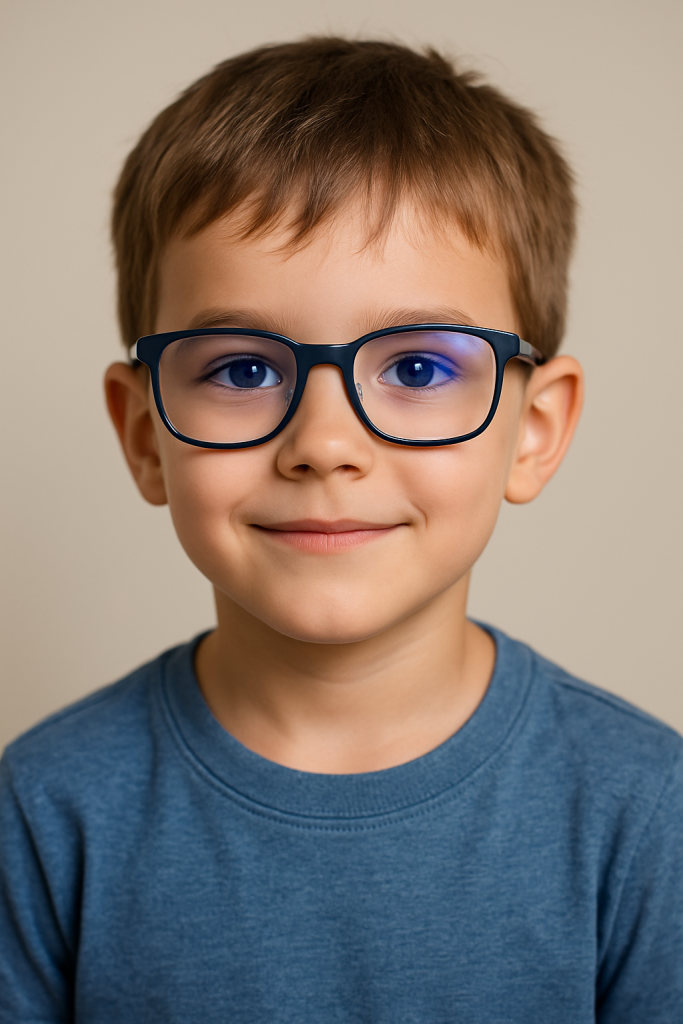
Do Kids Really Need Blue Light Glasses? (The Pediatric Research Truth)
Here’s where I’m going to give it to you straight: the science on blue light glasses for children is… complicated.
Unlike adults, where we have dozens of studies to reference, pediatric research on blue light glasses is surprisingly limited. Most eye doctors will tell you that children are not just “little adults” when it comes to eye development, and they’re absolutely right to be cautious.
What the Research Actually Shows
According to recent studies, children have increased sensitivity to light-related melatonin suppression. This means that blue light exposure before bedtime can be even more disruptive to kids’ sleep cycles than it is for adults. Dr. Sarah Johnson from the American Academy of Pediatric Ophthalmology explains: “Children’s pupils are larger and their lenses are clearer, allowing more blue light to reach the retina.”
But here’s the kicker: most research focuses on behavioral interventions rather than blue light glasses. The overwhelming consensus? Limiting evening screen time is more effective than relying solely on glasses.
The Safety Concerns Parents Should Know
Some pediatric ophthalmologists express concern about children wearing blue-blocking glasses all day long. The worry? We don’t fully understand how blocking blue light might affect developing eyes and natural circadian rhythms during daytime hours.
However, blue light glasses are generally considered safe for children when used appropriately – particularly in the evening hours before bedtime.
Gaming vs Study vs Sleep: Different Needs, Different Glasses
Not all screen time is the same, and neither should be your approach to blue light protection. Here’s how to match the right glasses to your child’s specific needs:
Gaming Glasses: Built for Battle
What to look for: Durability, comfort for extended wear, and anti-glare features
Key features needed:
- Flexible, virtually unbreakable frames (trust me on this one)
- Anti-glare coating to reduce screen reflection
- Lightweight design for 2+ hour gaming sessions
- Clear or lightly tinted lenses (won’t mess with game colors)
Best gaming times to use: Anytime during the day, but especially important for evening gaming sessions
Study Glasses: Focus Mode Activated
What to look for: Minimal color distortion, comfortable nose pads, professional appearance
Key features needed:
- Clear lenses that won’t alter text or image colors
- Anti-reflective coating for reading from screens
- Professional look (some kids are self-conscious during video calls)
- Adjustable nose pads for all-day comfort
Best study times to use: During virtual learning, homework time, and research projects
Sleep Glasses: Bedtime’s Best Friend
What to look for: Amber or orange-tinted lenses, maximum blue light blocking
Key features needed:
- Amber/orange tinting for maximum melatonin protection
- High blue light blocking percentage (80%+ for evening use)
- Comfortable for short-term wear (30 minutes to 2 hours)
- Easy for kids to remember to put on
Best sleep times to use: 2-3 hours before bedtime, especially during evening screen time
Quick Reference: Which Glasses When?
| Activity | Best Lens Type | Key Feature | Timing |
|---|---|---|---|
| Gaming | Clear/Light Tint | Durability | Anytime |
| Studying | Clear | Color Accuracy | Daytime |
| Pre-Sleep | Amber/Orange | Maximum Blocking | Evening Only |
Top 6 Blue Light Glasses for Children 2025
After testing dozens of options and reading hundreds of parent reviews, here are the standout choices for different needs and budgets:
1. Cyxus Kids Blue Light Blocking Glasses – $12-18
Best for: Budget-conscious families and first-time buyers
Cyxus has earned a reputation as the “gateway drug” of kids’ blue light glasses, and for good reason. These glasses punch way above their weight class in the affordability department.
Key Features:
- 90% blue light blocking using American HEV-Adsorb technology
- Super lightweight and flexible frames
- Available for ages 5-8 years
- 100% UV protection
- Lifetime warranty (yes, really!)
✓ Pros
- Incredible value for money
- Lifetime warranty coverage
- Lightweight design
- Good blue light blocking percentage
✗ Cons
- Limited size range
- Basic frame design
- May feel flimsy to some parents
Bottom line: Perfect starter glasses that prove blue light protection doesn’t have to break the bank.
2. TIJN Flexible Kids Blue Light Glasses – $15-25
Best for: Active kids who are hard on their belongings
If your child treats everything like a football, TIJN’s flexible frames are your new best friend. These glasses are built like tiny tanks.
Key Features:
- Ultra-flexible TR-90 frames (virtually unbreakable)
- Available in multiple colors and styles
- Suitable for ages 3-12
- Anti-reflective coating
- Two-pack options available
✓ Pros
- Exceptional durability
- Wide age range
- Multiple style options
- Comfortable for long wear
✗ Cons
- Mixed reviews on blue light effectiveness
- Some styles may look too “grown up”
- Higher price point for basic features
Bottom line: When durability is your top priority, TIJN delivers peace of mind.
3. Livho Computer Gaming Glasses for Kids – $20-30
Best for: Young gamers and tech-savvy kids
Livho bridges the gap between budget and premium with glasses specifically designed for gaming and extended screen time.
Key Features:
- TR90 frames with silicone temple hooks
- Ages 3-15 sizing
- American HEV-Adsorb technology
- Includes blue light test kit
- Gaming-optimized lens tinting
✓ Pros
- Excellent for gaming sessions
- Wide age range coverage
- Includes test kit for verification
- Comfortable for extended wear
✗ Cons
- Mixed durability reports
- May break within weeks for some users
- Gaming-specific tinting may not suit all activities
Bottom line: Great gaming glasses with proof they actually work, but durability can be hit-or-miss.
4. Felix Gray Kids Collection – $95-120
Best for: Families prioritizing premium quality and style
Felix Gray is the “luxury car” of blue light glasses, and their kids’ collection maintains those high standards with child-specific considerations.
Key Features:
- Handcrafted Italian acetate frames
- Impact-resistant polycarbonate lenses
- Two size options: Small (ages 4-8), Large (ages 9-13)
- Clear and amber lens options
- Prescription lens compatibility
✓ Pros
- Premium materials and construction
- Professional, stylish appearance
- Excellent customer service
- Prescription options available
- Both clear and sleep lenses
✗ Cons
- Significantly higher price point
- Limited sizing options
- May be “too nice” for very young children
- Online-only ordering (can’t try before buying)
Bottom line: Premium quality with a premium price tag – perfect for families who want the best money can buy.
5. EyeBuyDirect Kids Blue Light Collection – $25-45
Best for: Style-conscious kids and custom prescriptions
EyeBuyDirect offers the best of both worlds: trendy frames that kids actually want to wear, plus the option to add prescriptions.
Key Features:
- Wide variety of trendy frame styles
- Blue light filtering add-on option
- Prescription lens compatibility
- Virtual try-on technology
- Frequently updated style collections
✓ Pros
- Huge style selection
- Kids love the trendy designs
- Prescription options
- Competitive pricing
- Virtual try-on feature
✗ Cons
- Blue light filtering is an add-on cost
- Online ordering only
- Quality can vary by frame style
- Limited information on blue light blocking percentage
Bottom line: Perfect for kids who care about looking cool while protecting their eyes.
6. Babiators Screen Savers – $35-55
Best for: Toddlers and very young children (ages 0-5)
Babiators specializes in eyewear for the littlest humans, and their Screen Savers line brings blue light protection to the toddler set.
Key Features:
- Designed specifically for ages 0-5
- Flexible, safe materials
- Multiple fun colors and patterns
- Lost & Found guarantee
- No sharp edges or small parts
✓ Pros
- Perfect fit for toddlers
- Safety-first design
- Fun, kid-friendly colors
- Lost & Found guarantee
- Trusted toddler brand
✗ Cons
- Limited age range
- Higher price for the age group
- May be quickly outgrown
- Limited blue light blocking information
Bottom line: The gold standard for protecting tiny eyes from screen time.
How to Get Your Child to Actually Wear Them (The Real Parent Challenge)
Let’s be honest: you can buy the best blue light glasses in the world, but if they’re sitting in a drawer because your kid “forgot” to put them on, you’re not protecting anything except your wallet from future purchases.
Here are the strategies that actually work with real kids:
Make It Part of the Routine (Not a Battle)
The “Glasses First” Rule: No screen time until glasses are on. Period. This removes the negotiation and makes it automatic.
Let Them Choose Their Style
Kids are much more likely to wear something they picked out themselves. Even if their choice makes you cringe a little, remember: the best glasses are the ones they’ll actually wear.
Pro tip: Give them 2-3 pre-approved options and let them make the final choice. This gives them ownership without overwhelming them (or your budget).
Lead by Example
If you want your kids to take blue light protection seriously, get yourself a pair too. Kids mimic what they see, and family “glasses time” can become a bonding ritual.
Address the “But I Look Weird” Concern
This is especially important for tweens and teens. Some strategies that work:
- Show them cool older kids/teens wearing similar glasses
- Let them pick frames that match their personality
- Start with clear lenses (less obvious than tinted)
- Emphasize the “gaming performance” or “focus enhancement” benefits
Use Positive Reinforcement
Instead of nagging about wearing glasses, praise them when they remember on their own. “I love how you remembered your glasses before starting homework!” goes a lot further than “Don’t forget your glasses again.”
Make It Fun (For Younger Kids)
- Let them decorate the glasses case
- Create a “superhero eyes” story around wearing them
- Set up a special glasses storage spot that’s easy to remember
- Use fun timers or apps that remind them
Parent FAQ: Screen Time & Eye Health
Q: At what age should kids start wearing blue light glasses?
A: There’s no official “minimum age,” but most experts suggest that children who spend more than 2 hours a day on screens (which, let’s face it, is most kids today) could benefit from blue light protection. However, behavioral interventions like the 20-20-20 rule are equally important.
For toddlers under 3, focus on limiting screen time rather than adding glasses. For kids 3+, blue light glasses can be a useful tool as part of a comprehensive approach to screen time management.
Q: Can my child wear blue light glasses all day?
A: While blue light glasses are generally safe, some pediatric eye doctors recommend against all-day wear for developing eyes. The safest approach is to use them during active screen time, particularly in the evening hours.
Clear lenses for daytime use are typically fine, but save the amber/orange tinted lenses for evening use only (2-3 hours before bedtime).
Q: Will blue light glasses fix all our screen time problems?
A: Unfortunately, no. Blue light glasses are just one tool in your digital wellness toolbox. They work best when combined with:
- Regular screen breaks (20-20-20 rule)
- Proper lighting in the room
- Appropriate screen distances
- Limited evening screen time
- Good sleep hygiene
Q: My child already wears prescription glasses. Now what?
A: Great news! Many companies offer prescription blue light glasses, or you can add blue light filtering to existing prescription lenses. Talk to your child’s eye doctor about adding blue light protection to their next prescription update.
Q: How do I know if the glasses are actually working?
A: Look for these signs:
- Fewer complaints of eye fatigue or headaches
- Easier bedtime transitions after screen time
- Less eye rubbing during/after screen use
- Improved focus during screen-based activities
Some glasses (like Livho) come with blue light test kits that let you see the blocking effect visually.
Q: Are expensive glasses really better than cheap ones?
A: Not necessarily. The most important factors are:
- Proper fit for your child’s face
- Durability appropriate to your child’s activity level
- Blue light blocking percentage (look for at least 30% for daytime, 80%+ for evening)
- Whether your child will actually wear them
A $15 pair that gets worn daily is infinitely better than a $100 pair that sits unused.
Age-Appropriate Sizing Guide
Getting the right fit is crucial for both comfort and effectiveness. Here’s your sizing guide by age group:
Toddlers (Ages 2-4)
Key considerations: Safety first, durability second
- Frame width: 110-120mm
- Bridge width: 14-16mm
- Temple length: 120-125mm
- Best brands: Babiators, specially designed toddler options
- Must-haves: No sharp edges, flexible materials, easy to clean
Early Elementary (Ages 5-8)
Key considerations: Comfort for learning, durability for play
- Frame width: 125-135mm
- Bridge width: 16-18mm
- Temple length: 125-135mm
- Best brands: Cyxus, TIJN, Livho (small sizes)
- Must-haves: Adjustable nose pads, lightweight frames
Late Elementary (Ages 9-12)
Key considerations: Style becomes important, still need durability
- Frame width: 130-140mm
- Bridge width: 17-19mm
- Temple length: 135-145mm
- Best brands: Felix Gray (large), EyeBuyDirect, TIJN
- Must-haves: Cool factor, multiple style options
Teens (Ages 13+)
Key considerations: Style is paramount, adult features needed
- Frame width: 135-145mm
- Bridge width: 18-20mm
- Temple length: 140-150mm
- Best brands: Adult sizes from major brands
- Must-haves: Trendy styles, possibly prescription compatibility
How to Measure Your Child’s Face
If you’re ordering online, here’s how to get accurate measurements:
- Frame width: Measure from temple to temple across the face
- Bridge width: Measure across the bridge of the nose
- Temple length: Measure from the hinge to behind the ear
Pro tip: If your child currently wears glasses, check the size numbers printed on the inside of the temple arm – they usually follow the format: [frame width]-[bridge width]-[temple length].
The Bottom Line: Recommendations by Age Group
After all this research, testing, and parent feedback analysis, here are my top recommendations for each age group:
Toddlers (Ages 2-4): Babiators Screen Savers
Why: Safety-first design, perfect sizing, company specializes in little kids
Investment level: Medium ($35-55)
Best for: Parents who want peace of mind and proper toddler fit
Early Elementary (Ages 5-8): Cyxus Kids Blue Light Glasses
Why: Incredible value, good protection, lifetime warranty
Investment level: Low ($12-18)
Best for: Budget-conscious families or first-time buyers
Late Elementary (Ages 9-12): TIJN Flexible Kids Frames
Why: Durability meets style, wide size range, active-kid proof
Investment level: Medium ($15-25)
Best for: Active kids who are hard on their belongings
Teens (Ages 13+): EyeBuyDirect Kids Collection
Why: Style variety, prescription options, teen-approved designs
Investment level: Medium ($25-45)
Best for: Style-conscious teens who want to look good
Premium Option (Any Age): Felix Gray Kids Collection
Why: Top-tier quality, professional appearance, excellent customer service
Investment level: High ($95-120)
Best for: Families who prioritize premium quality and have the budget
Gaming Specialist (Ages 6+): Livho Computer Gaming Glasses
Why: Gaming-optimized features, includes test kit, good price point
Investment level: Medium ($20-30)
Best for: Kids who spend significant time gaming
Final Thoughts: It’s About Balance, Not Perfection
Here’s the thing about blue light glasses for kids – they’re not a magic bullet that will solve all your screen time concerns. But they can be a valuable tool in your digital wellness toolkit, especially when used thoughtfully as part of a broader approach to healthy screen habits.
The truth is, our kids are growing up in a digital world whether we like it or not. Virtual learning, digital creativity tools, and yes, even gaming can be valuable parts of their development. The goal isn’t to eliminate screens entirely (good luck with that), but to help our children interact with technology in healthier ways.
Blue light glasses can help with that goal, but only if your child will actually wear them. That’s why fit, comfort, and style matter just as much as blue light blocking percentages. The best glasses are the ones that become part of your child’s routine, not a daily battle.
My advice? Start with a budget-friendly option like the Cyxus glasses. If your child takes to wearing them and you see benefits, you can always upgrade later. If they end up forgotten in a drawer, you haven’t broken the bank learning that blue light glasses aren’t the right solution for your family.
Remember: good digital habits, regular eye breaks, proper lighting, and reasonable screen time limits will always be more important than any pair of glasses. But for families looking for an extra layer of protection – especially for evening screen use – blue light glasses can be worth considering.
Most importantly, trust your instincts as a parent. You know your child best. If something doesn’t feel right with their screen use or eye comfort, don’t hesitate to consult with your pediatrician or a pediatric eye specialist. They can provide personalized guidance based on your child’s specific needs and development.
Sweet dreams, and happy (protected) screen time!