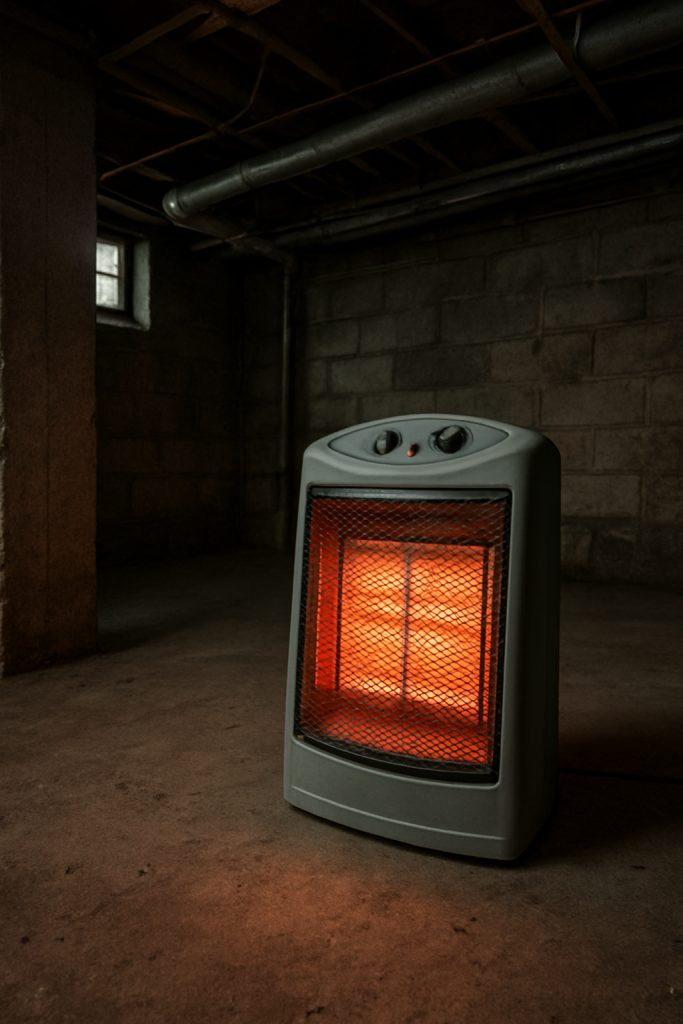
7 Best Space Heaters for Basement Apartments Under $100 (2025 Review)
Last Updated: August 2025
As an amazon affiiliate, I earn from purchases at no additional cost to you.
Quick Comparison: Top Space Heaters for Basement Apartments Under $100
| Space Heater Model | Heating Type | Coverage Area | Safety Features | Price Range |
|---|---|---|---|---|
| Dr. Infrared Heater DR-968 | Infrared | Up to 600 sq ft | Tip-over, overheat | $80-95 |
| Lasko 754200 Ceramic | Ceramic Fan | Up to 300 sq ft | Overheat protection | $25-35 |
| DeLonghi EW7707CM Oil-Filled | Oil-Filled Radiator | Up to 144 sq ft | Thermal cutoff | $65-80 |
| Honeywell HCE200W | Ceramic Personal | Up to 100 sq ft | Cool-touch housing | $20-30 |
Understanding Basement Apartment Heating Challenges
Thermal Mass and Heat Loss
Concrete walls and floors in basement apartments act as massive heat sinks, absorbing warmth and making spaces feel consistently cold. This thermal mass effect means traditional heating calculations often underestimate the heating power needed for comfortable temperatures.
Moisture and Humidity Issues
Below-grade units typically have higher humidity levels due to ground moisture. High humidity makes air feel colder and can cause safety issues with certain heater types. Look for heaters that handle moisture well and won’t create additional humidity problems.
Electrical System Limitations
Many basement apartments have older electrical systems or shared circuits that can’t handle high-wattage heating equipment. Choosing efficient heaters that operate within typical 15-amp circuit limitations is crucial for safe operation.
Air Circulation Problems
Basement apartments often have poor air circulation due to low ceilings, few windows, and confined layouts. Effective heating requires equipment that can move warm air throughout the space or provide radiant heat that doesn’t rely on air movement.
Detailed Reviews: Best Space Heaters for Basement Apartments Under $100
1. Dr. Infrared Heater DR-978 – Best Overall for Large Basements
Price: $80-100 | Type: Infrared | Power: 1500W | Coverage: Up to 600 sq ft
The Dr. Infrared Heater DR-978 excels in basement environments because its infrared technology directly heats objects and people rather than just air. This approach works particularly well against concrete walls and floors that would otherwise absorb and dissipate heated air, making it ideal for the thermal challenges of below-grade living.
Pros:
- Infrared heat penetrates concrete thermal mass effectively
- Maintains humidity levels (doesn’t dry out air like forced air heaters)
- Quiet operation perfect for bedroom/living space heating
- Advanced safety features including tip-over and overheat protection
- Remote control for convenient operation
- Blower fan helps distribute heat in larger basement spaces
- Energy efficient operation reduces electric bills
Cons:
- Takes longer to heat very cold spaces initially
- Larger footprint may not fit in very cramped basements
- Higher upfront cost compared to basic ceramic heaters
- Infrared heat stops immediately when turned off
Best for: Large basement apartments, spaces with concrete floors, users who want quiet operation, and apartments where maintaining humidity is important.
2. Lasko 754200 Ceramic Tower – Best Budget Option
Price: $25-35 | Type: Ceramic Fan | Power: 1500W | Coverage: Up to 300 sq ft
The Lasko 754200 proves that effective basement heating doesn’t require a big budget. This compact ceramic heater’s oscillating fan distributes warm air efficiently throughout confined basement spaces, while its simple design means fewer components that could fail in humid conditions.
Pros:
- Exceptional value under $35 with reliable performance
- Oscillating feature distributes heat throughout confined spaces
- Compact tower design fits in tight basement corners
- Quick heating response when you first enter cold basement
- Simple controls reduce complexity and potential failures
- Built-in carry handle for easy repositioning
- Overheat protection provides basic safety
Cons:
- Fan noise may be noticeable in quiet basement environments
- Limited to smaller basement spaces or single rooms
- Basic construction may not withstand heavy daily use
- No timer or advanced safety features
- Forced air heating can increase dust circulation
Best for: Budget-conscious renters, small basement studios, occasional heating needs, and users who prioritize portability and quick heating response.
Browse LASKO Heaters on AMAZON3. DeLonghi EW7707CM Oil-Filled Radiator – Best for Consistent Heat
Price: $65-80 | Type: Oil-Filled Radiator | Power: 1500W | Coverage: Up to 144 sq ft
Oil-filled radiators excel in basement apartments because they provide steady, gentle heat that works well with concrete thermal mass. The DeLonghi EW7707CM’s sealed oil system operates safely in humid basement conditions while providing consistent warmth that continues even after the unit cycles off.
Pros:
- Silent operation perfect for bedroom or study areas
- Continues radiating heat after unit cycles off (thermal retention)
- Works well with concrete thermal mass for steady heating
- No fan means no dust circulation or air drying
- Three heat settings plus adjustable thermostat
- Thermal cutoff safety feature prevents overheating
- Wheels make repositioning easy despite weight
Cons:
- Slow to heat cold spaces initially (30+ minutes to noticeable warmth)
- Limited coverage area suitable only for smaller basements
- Heavy weight (22 lbs) makes moving more difficult
- Takes up floor space with radiator fin design
- Higher surface temperatures require careful placement
Best for: Basement bedrooms, quiet study areas, users who prefer gentle consistent heat, and spaces where silent operation is priority.
4. Honeywell HCE200W Personal Ceramic – Best for Personal Spaces
Price: $20-30 | Type: Personal Ceramic | Power: 250W | Coverage: Up to 100 sq ft
For basement dwellers who work or spend time in specific areas, the Honeywell HCE200W provides targeted warmth without heating the entire space. Its low power consumption works well with older electrical systems while the compact size fits perfectly on desks or tables in cramped basement offices.
Pros:
- Very low power consumption (250W) safe for older circuits
- Compact desktop size perfect for basement workspaces
- Cool-touch housing safe for confined spaces
- Immediate warmth for personal heating zones
- Two heat settings plus fan-only mode
- Extremely affordable for targeted heating needs
- Auto shut-off if unit tips over
Cons:
- Very limited heating capacity (personal use only)
- Won’t heat larger basement areas effectively
- Basic construction may not last with heavy use
- No thermostat or temperature control
- Fan noise noticeable in quiet environments
Best for: Basement home offices, personal workspace heating, supplemental warmth at desks or reading areas, and users with very limited electrical capacity.
5. Vornado MVH Vortex Heater – Best Air Circulation
Price: $60-75 | Type: Vortex Fan | Power: 1500W | Coverage: Up to 300 sq ft
The Vornado MVH addresses basement apartments’ poor air circulation with its signature vortex technology. This approach creates a circulation pattern that moves warm air throughout the space, preventing cold spots that are common in basement layouts with multiple rooms or alcoves.
Pros:
- Vortex technology circulates air throughout entire basement space
- Prevents stratification and cold spots in multi-room basements
- Works well in basements with poor natural air circulation
- Three heat settings plus adjustable thermostat
- Tip-over and overheat protection for safety
- Compact design fits in corners or on tables
- 5-year warranty shows manufacturer confidence
Cons:
- Fan operation creates noticeable sound levels
- Forced air can increase dust and allergen circulation
- May dry out air in already humid basement environments
- Initial heating takes time to circulate throughout space
Best for: Multi-room basement apartments, spaces with poor air circulation, users who want whole-space heating, and apartments with alcoves or separate areas.
6. Mr. Heater F232000 MH9BX Buddy – Best for Very Cold Basements
Price: $85-100 | Type: Propane Radiant | Power: 4,000-9,000 BTU | Coverage: Up to 225 sq ft
For basement apartments in extremely cold climates or those with inadequate electrical service, the Mr. Heater Buddy provides powerful propane heating. Its radiant heat works exceptionally well against concrete thermal mass, though proper ventilation and safety considerations are essential.
Pros:
- Powerful radiant heat effective against concrete thermal mass
- No electrical requirements work with limited basement circuits
- Instant heat for extremely cold basement conditions
- Portable design allows heating specific areas as needed
- Multiple safety features including low oxygen shutoff
- Works during power outages
- Fuel efficient for cost-effective heating
Cons:
- Requires adequate ventilation and may not be allowed in all apartments
- Ongoing propane costs and tank refills needed
- Produces combustion byproducts requiring safety considerations
- Tank storage and handling required
- Check local codes and lease agreements before use
Best for: Extremely cold climates, basements with inadequate electrical service, emergency heating situations, and users who have verified propane use is permitted and safe.
7. Aikoper Space Heater – Best Smart Features Under $100
Price: $70-90 | Type: Ceramic with Remote | Power: 1500W | Coverage: Up to 200 sq ft
The Aikoper Space Heater brings modern convenience to basement heating with its digital display, remote control, and programmable timer. These features are particularly valuable in basement apartments where manually adjusting heat settings requires navigating to less accessible areas.
Pros:
- Remote control convenient for basement bedroom or living area use
- 12-hour timer allows pre-heating before arriving home
- Digital display shows current temperature and settings
- Oscillating feature distributes heat evenly
- ECO mode automatically maintains set temperature
- Multiple safety features including child lock
- Carries handle for easy repositioning
Cons:
- More complex electronics may be less reliable in humid conditions
- Remote control can be easily misplaced in small spaces
- Higher price point compared to basic models
- Digital display may be too bright for bedroom use
Best for: Tech-savvy users, basement apartments with scheduled occupancy, users who want automated temperature control, and spaces where remote operation is valuable.
Safety Considerations for Basement Apartment Heating
Electrical Safety in Basement Environments
- Circuit capacity: Ensure your electrical circuit can handle 1500W loads (typically requires 15-amp circuit)
- GFCI protection: Many basements require GFCI outlets; ensure your heater is compatible
- Extension cords: Never use extension cords with space heaters; always plug directly into wall outlets
- Moisture protection: Keep heaters away from areas where water could contact electrical components
Ventilation and Air Quality
- Carbon monoxide risks: Never use unvented fuel-burning heaters in sealed basement spaces
- Humidity management: Some heaters can dry air excessively; monitor humidity levels
- Fresh air circulation: Ensure adequate ventilation to prevent stuffiness and maintain air quality
- Combustible materials: Maintain clearances from curtains, furniture, and stored items
Fire Prevention in Confined Spaces
- Clearance requirements: Maintain 3-foot clearance on all sides of space heaters
- Stable placement: Ensure heaters can’t be knocked over in confined spaces
- Automatic shutoff: Prioritize heaters with tip-over and overheat protection
- Never leave unattended: Turn off heaters when leaving or sleeping
Optimizing Heating Efficiency in Basement Apartments
Improving Insulation and Air Sealing
- Window treatments: Heavy curtains or thermal blinds reduce heat loss through basement windows
- Draft sealing: Weather strip doors and seal gaps around windows
- Floor coverings: Rugs and carpets provide insulation over concrete floors
- Wall treatments: Tapestries or fabric wall hangings add insulation to concrete walls
Strategic Heater Placement
- Away from concrete walls: Heat concrete indirectly rather than placing heaters against walls
- Central locations: Position heaters where air can circulate freely
- Upper placement: Warm air rises; elevating heaters improves circulation
- Multiple zones: Use smaller heaters in different areas rather than one large unit
Energy Efficiency Tips
- Thermostat use: Maintain steady temperatures rather than heating on-demand
- Zone heating: Heat only occupied areas to reduce energy consumption
- Timing: Use programmable features to pre-heat before occupancy
- Supplemental heating: Use space heaters to supplement rather than replace central heating
Choosing the Right Heating Type for Your Basement
Infrared Heaters
Best for: Large basements, concrete floors, quiet operation needs
- Pros: Effective against thermal mass, maintains humidity, quiet operation
- Cons: Slower initial heating, higher upfront cost, directional heating
Ceramic Fan Heaters
Best for: Quick heating, smaller spaces, budget constraints
- Pros: Fast heating response, affordable, good air circulation
- Cons: Can dry air, fan noise, may stir up dust
Oil-Filled Radiators
Best for: Consistent heat, quiet operation, overnight heating
- Pros: Silent operation, thermal retention, steady heat output
- Cons: Slow heating response, heavy weight, takes floor space
Convection Heaters
Best for: Whole-space heating, poor air circulation areas
- Pros: Even heat distribution, good for larger spaces, energy efficient
- Cons: Slower heating, requires good air circulation, higher cost
Frequently Asked Questions
How much does it cost to heat a basement apartment with a space heater?
A 1500W space heater running 8 hours daily costs approximately $35-50 per month depending on local electricity rates (assuming $0.12-0.15 per kWh). Basement apartments may require longer run times due to thermal mass, potentially increasing costs by 20-30% compared to above-grade units.
Are space heaters safe to use overnight in basement apartments?
Modern space heaters with proper safety features (tip-over protection, overheat shutoff, cool-touch housings) can be safer for overnight use, but many experts recommend turning heaters off when sleeping. Oil-filled radiators are generally considered the safest option for extended unattended operation due to their lower surface temperatures and thermal retention.
Why does my basement apartment feel colder than the thermostat reading?
Concrete walls and floors absorb body heat, making basements feel 5-10 degrees colder than actual air temperature. High humidity also makes air feel colder. Radiant heaters that warm objects and surfaces often feel more comfortable than those that only heat air.
Can I use multiple space heaters in my basement apartment?
Yes, but ensure your electrical system can handle the combined load. Most basement apartments have 15-amp circuits, limiting you to one 1500W heater per circuit. Using multiple smaller heaters on different circuits can be more effective than one large unit, but always verify electrical capacity first.
Do space heaters increase humidity in basement apartments?
Most electric space heaters don’t add humidity to the air. Combustion heaters (like unvented propane or kerosene heaters) do produce water vapor, but these should generally not be used in basement apartments due to ventilation concerns. Some heaters may reduce relative humidity by warming the air.
How do I prevent my space heater from tripping circuit breakers?
Ensure you’re using a dedicated circuit for your space heater. Avoid plugging other high-wattage appliances (refrigerators, microwaves, hair dryers) into the same circuit. If circuits continue tripping, consider using a lower-wattage heater or having an electrician evaluate your electrical system.
Conclusion: Staying Warm in Your Basement Apartment
Basement apartments present unique heating challenges, but the right space heater under $100 can transform your below-grade living space into a comfortable, warm environment. The key is choosing equipment that addresses the specific issues of concrete thermal mass, humidity, and confined spaces while operating safely within your electrical limitations.
For most basement apartments, the Dr. Infrared Heater DR-968 provides the best overall performance, effectively heating against concrete surfaces while maintaining safety and efficiency. Budget-conscious renters will find excellent value in the Lasko 754200 for quick heating, while those prioritizing quiet operation should consider the DeLonghi EW7707CM oil-filled radiator.
Remember that effective basement heating often requires a combination approach: proper heater selection, strategic placement, basic insulation improvements, and realistic expectations about heating costs. With the right equipment and setup, your basement apartment can be just as comfortable as any above-grade unit, giving you a cozy refuge regardless of outdoor temperatures.